Scales & keys
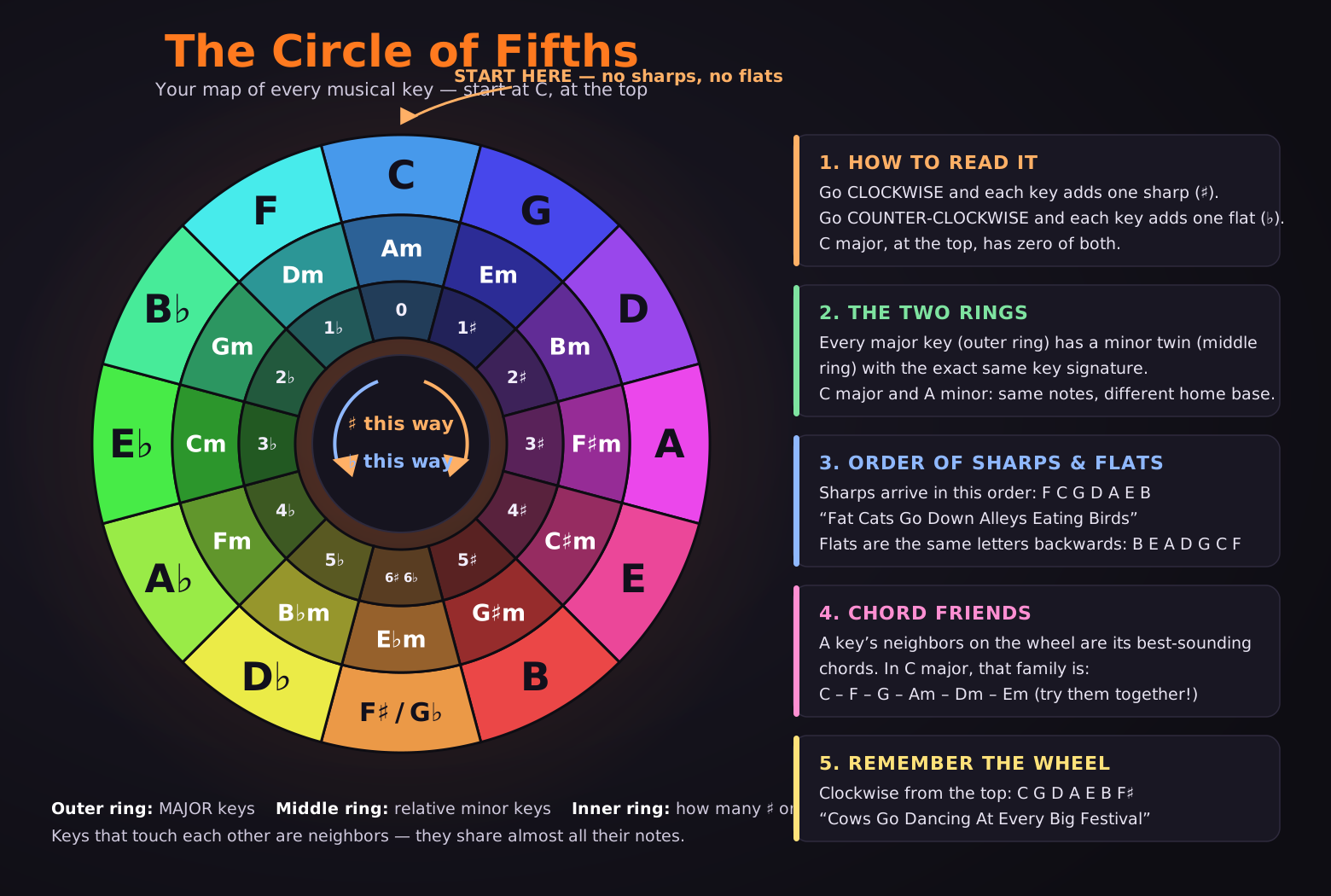
Pick any key — major, minor, or Mixolydian — and see its scale with the right sharps and flats, the seven chords that belong to it, and the progressions songs actually use — all laid out on the circle of fifths.
C major scaleno sharps or flats
Same seven notes, different home base: shares this exact key signature — it's the relative minor of C major.
Chords in C majorthe Nashville numbers
Build a chord on each note of the scale and you get these seven — the only chords a song in C major “wants” to use. Players call them by number so a song can move to any key: “it goes 1, 4, 5” works whether you play it in C or anywhere else.
Common progressions in C major
Blues, country, folk, rock ’n’ roll — thousands of songs use these three chords and nothing else.
The most-used progression in modern pop. Once you hear it, you’ll hear it everywhere.
Doo-wop and slow-dance ballads — “Stand by Me” runs on this loop.
The 2–5–1 pulls you home to the root. The backbone of jazz, and a great ending for any song.
Why the numbers matter
- When someone says a song “goes 1, 4, 5,” the numbers are the scale degrees the chords are built on. Learn the pattern once and you can play the song in any key.
- In a major key, numbers 1, 4, and 5 are always major chords; 2, 3, and 6 are always minor; 7 is the odd diminished one. Minor keys flip the pattern — 1, 4, and 5 go minor while 3, 6, and 7 go major — but it’s just as fixed. Mixolydian keeps the major tonic but flattens the 7: you get a major 1, a minor 5, and a ♭7 major chord — the open sound of rock and blues. Learn each pattern once and it works in all twelve keys.
- Stuck on which chords fit a melody? Find the key on the circle — the answer is almost always the key itself plus its two neighbors and their minors.
Want to hear this in action? The Key of C lesson walks through it chord by chord →
Need the finger shapes for these chords? Look them up in the chord library →
Circle of fifths
Every key on one wheel, arranged so neighbors share almost all their notes — a key's best-sounding chords are the ones touching it.